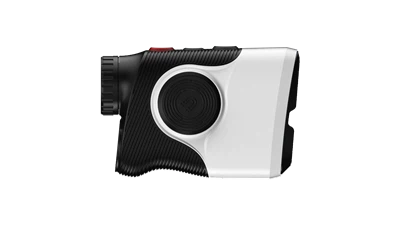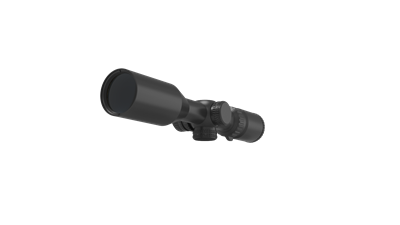
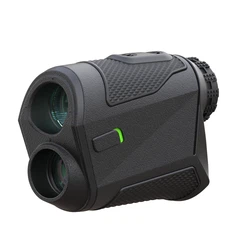

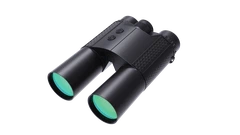
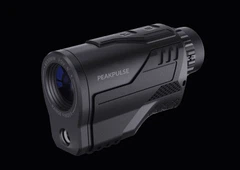
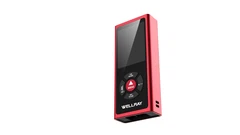
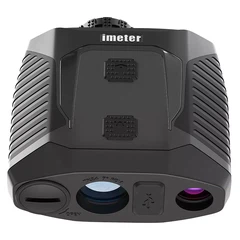

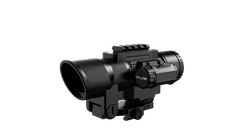
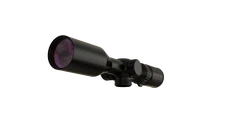

Laser rangefinder is a measurement tool that uses laser as a carrier to achieve ranging function. At present, the lasers used in handheld laser rangefinders on the market mainly include the following: semiconductor lasers with working wavelengths of 905 nm and 1540 nm, and YAG lasers with working wavelengths of 1064 nm. The wavelength of 1064 nanometers is harmful to human skin and eyes, especially if the eyes are accidentally exposed to lasers with a wavelength of 1064 nanometers, the damage to the eyes may be permanent. Therefore, in foreign countries, the 1064-nanometer laser is completely banned in handheld laser rangefinders.
For the 905nm and 1540nm laser rangefinders, we call them "safe". For the 1064-nanometer laser rangefinder, we call it "unsafe" because of its potential harm to the human body.
Laser rangefinders use lasers for distance measurement, and pulsed laser beams are monochromatic light sources with very concentrated energy, so do not use your eyes to look directly at the launch port, and do not use an aiming telescope to observe the smooth reflective surface to avoid damage to eyes. Be sure to measure according to the safe operation specifications in the instrument manual. When measuring in the field, do not point the transmitter port of the instrument directly at the sun to avoid burning out the photosensitive element of the instrument.