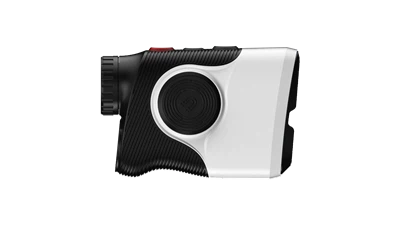
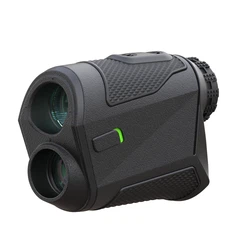



In distance measurement, many people do not know what the slope value is. But once golfers master it, not only can the score be lowered, but also more fun. Now we will take you to know this.
First, the term "slope value" is used in several places in golf, such as in the handicap system. The "slope value" there usually refers to the variation in difficulty for different tees, for high handicap and low handicap players. Today, the slope we refer to is the slope in the true sense, that is, the change in height between two points. Downhill is when the height of the starting point is higher than the ending point, and uphill when the height of the starting point is lower than the ending point. On the course, we are dealing with slope from time to time, because very rarely, we hit the ball at the same height as where we landed.
But usually, we don't have to worry about such height changes, because a little height change has little effect. For most of us, it is impossible for the same club to always hit the same spot, or within a 3-meter radius. But it does not mean that we can ignore the slope.
The most obvious example is the mountain course. If you don't account for drastic changes in height, you probably won't be able to get close to the flagpole, no matter how well-played your irons are.